
Construction and building loans in Geelong
Building a new home in Geelong works very differently from buying an existing one, and the loan that funds it does too. Instead of a single settlement, the money is released in stages as your builder finishes each part of the house. An experienced broker from our network explains how a construction loan is structured, which lenders suit your contract and estate, and what the bank will need at each progress payment.
How a construction loan differs from a standard home loan
With an established purchase the lender hands over the full loan amount on the settlement day and you start repaying it straight away. A construction loan holds the approved amount in reserve and draws it down in instalments that track the build. You only pay interest on the money that has actually been released, so in the early weeks, when only the deposit and slab have been funded, your repayments are far smaller than they will be once the house is finished. The lender approves the whole facility up front based on the land value plus the fixed cost of the build, but the cash flows out gradually against the work completed. That single difference shapes everything else: the paperwork, the valuation, the repayment type and the timeline.
It also means the lender is taking on more risk than a normal purchase, because there is no finished home to fall back on until the last brick is laid. To manage that, banks ask for more documentation, value the property on a different basis, and release each payment only after they are satisfied the previous stage is genuinely complete. Knowing how that process runs before you sign a building contract is what keeps a Geelong build moving without cash-flow surprises.
Progress payments and the building stages
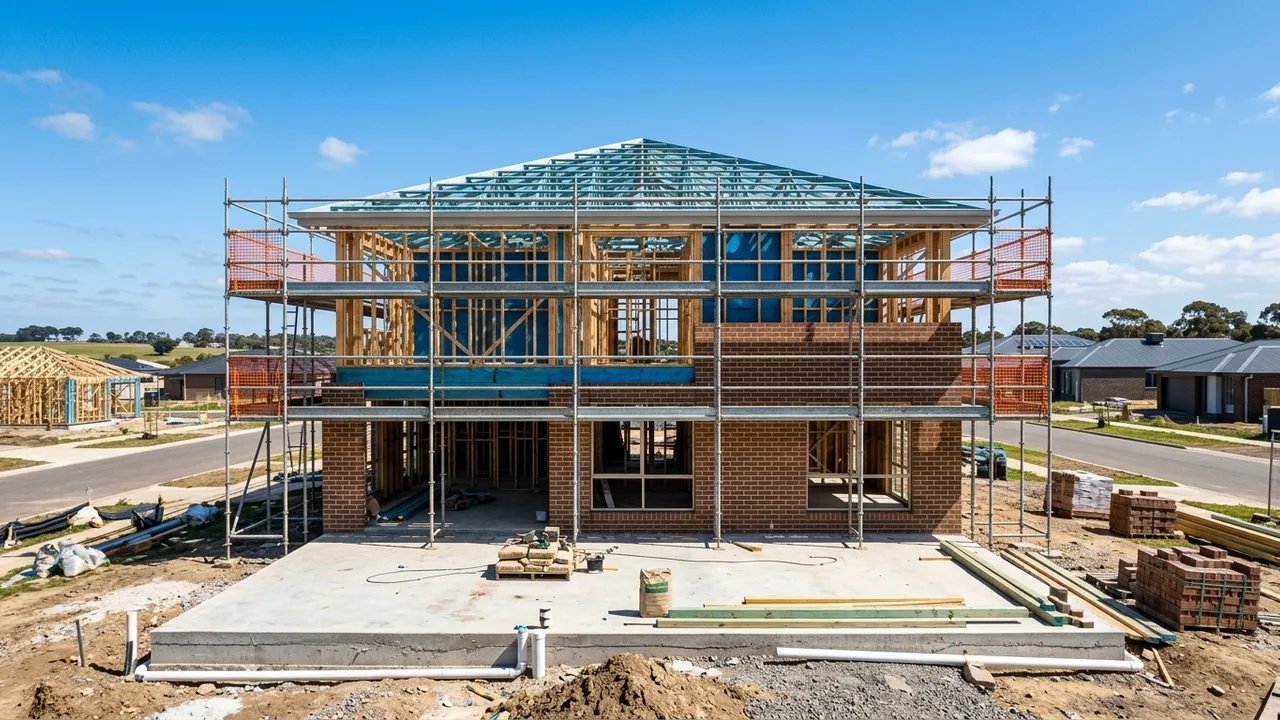
Construction lending is built around progressive drawdowns, also called progress payments. The loan is released in a set sequence that follows the standard building stages: the deposit to get the contract underway, then the base or slab once the foundation is poured, the frame when the timber or steel skeleton is up, lock-up when the external walls, windows and roof are on and the house can be secured, fixing when the internal cabinetry, doors and fittings go in, and finally completion when the build is handed over. Most fixed-price contracts in Victoria use roughly five drawdowns along these lines, though the exact split varies between builders.
At each stage the builder issues an invoice, you authorise it, and the lender typically sends a valuer or accepts evidence that the work is done before releasing the funds straight to the builder. Because the bank pays the builder directly, you are never holding large sums between stages, but you do need every drawdown to clear on time so the next stage of work is not held up. A broker lines your lender's drawdown turnaround up against your builder's schedule so the two keep pace with each other.
Why lenders want a fixed-price building contract
Almost every lender funding a new build wants to see a fixed-price building contract from a registered builder before they will approve the loan. The contract gives the bank a firm total cost and a defined stage schedule, which is what lets them size the facility and structure the drawdowns with confidence. Cost-plus arrangements, where the final price is open-ended, are much harder to finance because the lender cannot pin down how much it is ultimately committing to. The contract also has to align with the plans and permits, since the valuer relies on those documents when assessing the property. If your contract has provisional sums or allowances that could blow out, a broker will flag how a given lender treats them before you commit.
House-and-land packages, knock-down rebuilds and owner-builder projects
Most new builds around Geelong fall into one of three patterns, and each is financed a little differently. A house-and-land package in an estate is usually split into two parts: you settle on the land first with a standard loan, then the construction loan funds the home built on it. A knock-down rebuild, common on older blocks in suburbs like Belmont, Highton and Newcomb where the land is worth keeping but the house has had its day, uses the existing land as security while the demolition and new build are funded through the construction facility. Owner-builder projects, where you manage the trades yourself rather than engaging a registered builder, are the hardest to fund: without a fixed-price contract the lender has less certainty, valuations are more conservative, and many banks either decline them or lend at a lower percentage of the cost. A broker knows which lenders still consider owner-builder applications and what evidence they expect.
Valuations on completion and how the build is assessed
A construction loan is valued differently from a normal purchase. The lender orders an "on-completion" valuation, which estimates what the finished property will be worth once it is built to the plans and specifications, rather than valuing the bare land or the half-finished shell. Your borrowing is then assessed against that as-if-complete figure and the total cost of land plus build. This matters in fast-moving Geelong growth corridors, where the contract price on a new home and the on-completion valuation do not always line up, particularly on the larger or more bespoke designs. If the valuation comes in under the contract price, you may need a larger deposit to cover the gap, so it pays to understand each lender's valuation approach before you sign rather than after.
Interest-only during construction, then converting to principal and interest
During the build, construction loans almost always run as interest-only (IO), meaning your repayments cover only the interest on the funds drawn so far and not the principal. Because the balance climbs stage by stage, so do those interest-only repayments, but they stay manageable in the early months. Once the final drawdown is made and the home is complete, the loan converts to principal and interest (P&I), where your repayments start reducing the loan balance as well. This structure keeps your outgoings lower while you may still be paying rent or covering other costs during the build, then steps up to a full repayment once you move in. A broker sets the IO construction period to match a realistic build timeline so it does not expire before the keys are handed over.
Building in Geelong's growth corridors
Most new construction in the region is concentrated in the southern and northern growth corridors, and the volume of building there is exactly why construction finance is so active locally. Armstrong Creek, with estates like Warralily, leads the way, alongside neighbouring Mount Duneed and the newer Charlemont releases pushing out from the Surf Coast Highway. Out toward Lara and across the Bellarine gateway at Leopold, fresh estates are drawing first home buyers and upgraders building their first new home. Each estate has its own developer staging, title timing and sometimes its own design covenants, all of which can affect when the land settles and when construction can start. A broker who sees these estates regularly can tell you how a given lender handles the land-then-build split common to these packages.
Using the Victorian First Home Owner Grant on a new build
If this is your first home, a new build can qualify for the Victorian First Home Owner Grant of $10,000. The grant applies only to brand-new homes that have never been lived in, including newly built houses and house-and-land packages, valued at $750,000 or less, which makes it a natural fit for the new estates across Armstrong Creek, Mount Duneed and Charlemont. It does not apply to established homes. At least one buyer must live in the property as their main residence for a continuous 12 months, starting within 12 months of completion. The grant is administered by the State Revenue Office Victoria, and on an eligible build it can often be directed toward your final drawdown. A broker helps you confirm whether your specific contract and price qualify, and how the grant fits alongside any first-home stamp duty concession, before you commit.
How the construction loan review works
Submit the short form with your land details, your building contract or estate, and your deposit. An experienced broker from our network reviews your situation, explains how the drawdowns and valuation will work for your project, and compares the lender panel for a construction facility that fits your build. If you decide to proceed, lenders pay the broker a commission on settlement, which is disclosed to you in writing in a Credit Quote. The broker holds the Australian Credit Licence or Credit Representative authorisation details and provides regulated credit advice.
Information on this page is general only and does not take into account your individual situation, objectives or needs. The Victorian First Home Owner Grant figures are current as at June 2026 and set by the State Revenue Office Victoria; confirm current settings before acting. Any indication of borrowing power is not an offer of credit and is subject to a lender's approval.
Loan review
Planning a new build or knock-down rebuild in Geelong?
Submit the form to review your construction finance, drawdowns and lender options.
Construction & Building Loans across Geelong
Pick your suburb for the local notes, or submit the form for a free review.